Bun mam is made with fermented fish paste, typically from linh fish or sac fish, both specialties of the southern rivers. The paste is cooked into a broth, then strained to remove bones, and seasoned with lemongrass, garlic, shallots, chili, and sometimes coconut water. The result is a savory, aromatic broth that’s both earthy and umami-rich.
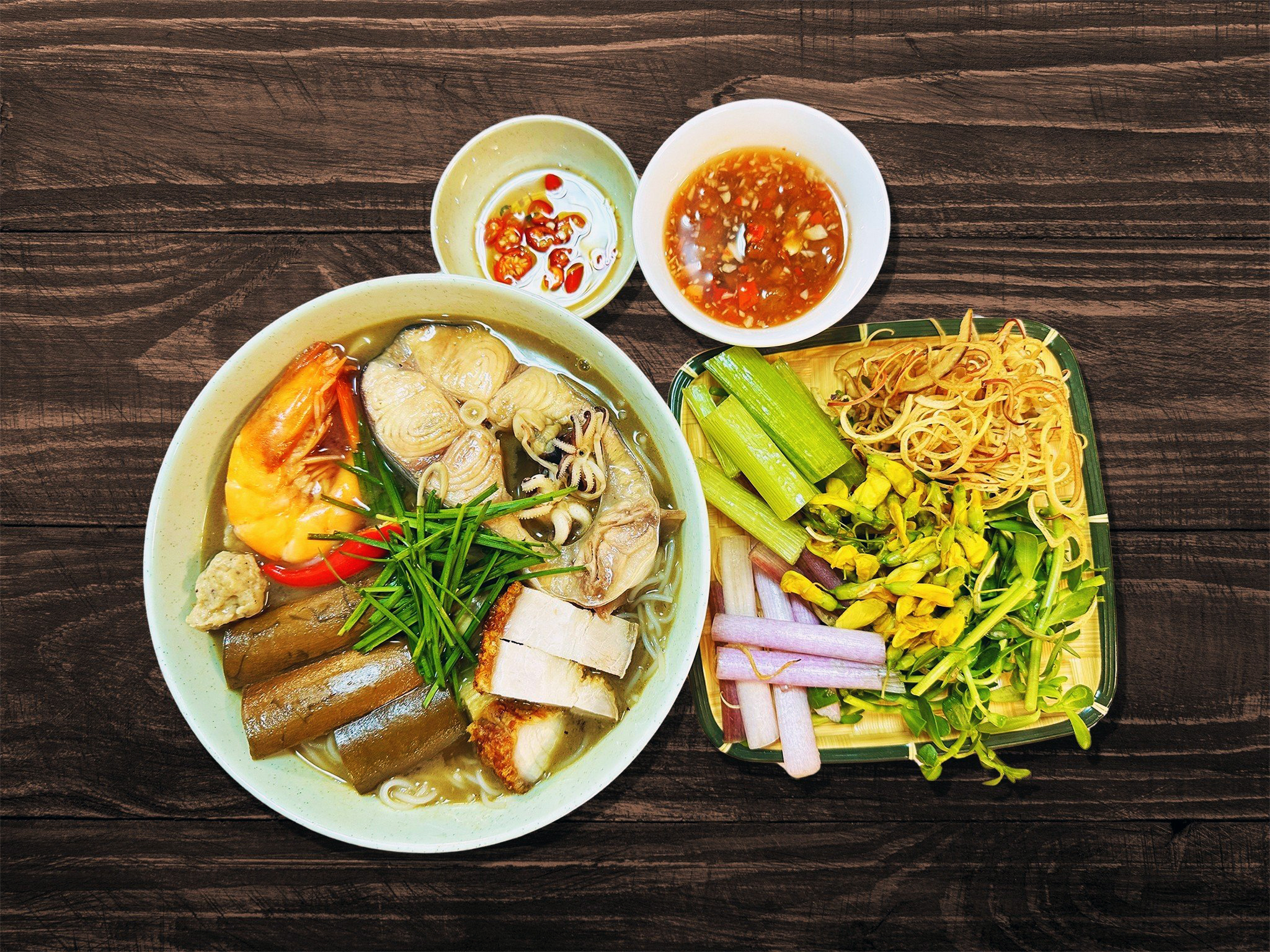
Authentic and delicious Bun Mam from the Mekong Delta.
A traditional bowl of bun mam includes an array of proteins such as shrimp, squid, basa fish or catfish, and crispy roasted pork belly. Some variations even include eggplant slices. The ingredients are carefully arranged over rice vermicelli, then topped with green onions, herbs, and fresh chili.
:quality(75)/rau_an_bun_mam_01_a9c10ea0b6.jpg)
Traditional Mekong-style fresh herbs and vegetables served on the side.
What makes bun mam special is its deep, layered flavor — a balance of the intense fermented broth, the sweetness of fresh seafood, and the spiciness of chili. It’s typically served with a variety of fresh vegetables like banana blossom, water spinach, rice paddy herbs, and bean sprouts, which help lighten the strong flavor and create a well-rounded experience.
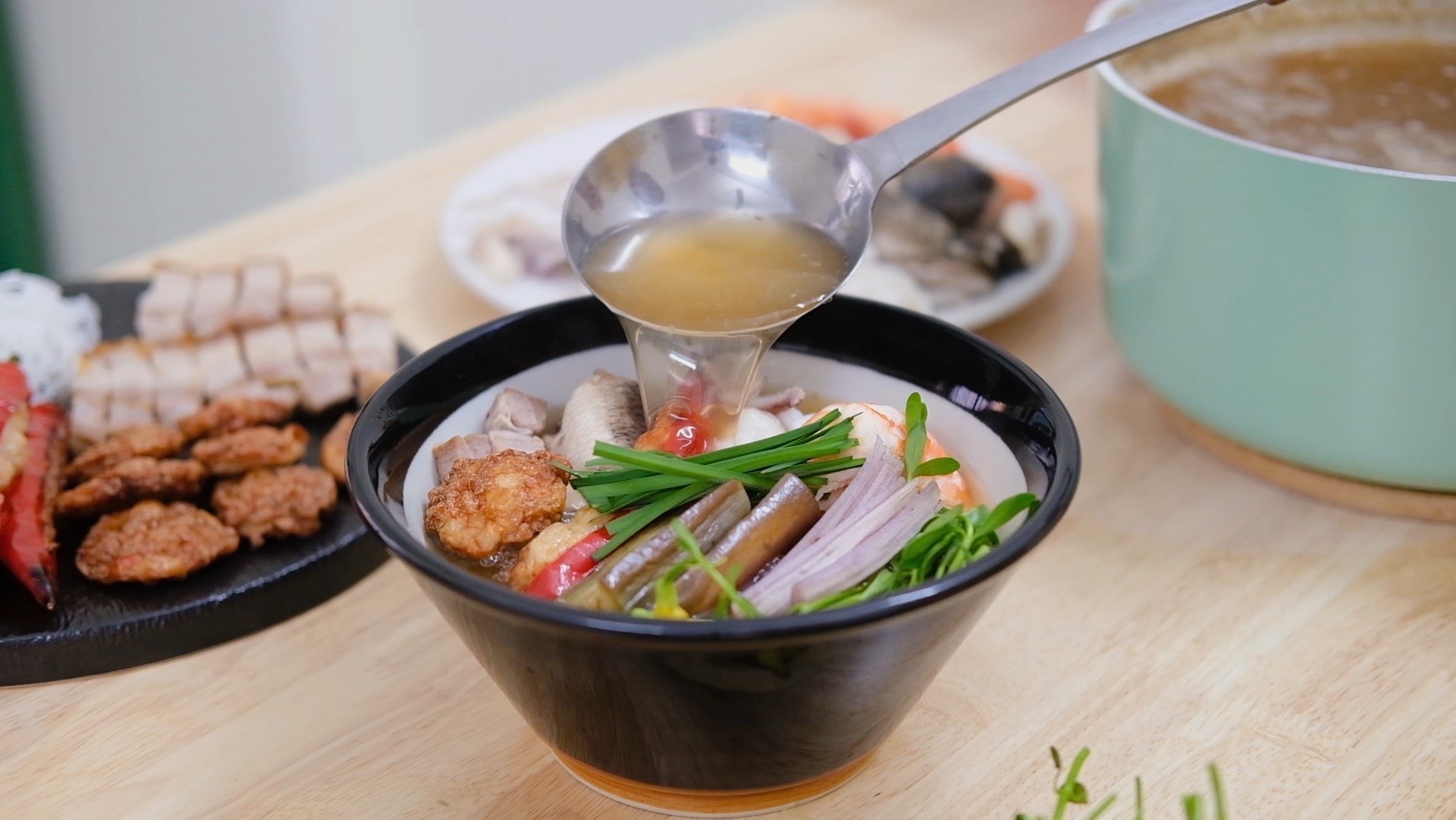
Traditional Mekong-style fresh herbs and vegetables served on the side.
Bun mam is more than just a dish — it’s a representation of the Mekong Delta’s culinary identity. It reflects the resourcefulness of the locals, who transform humble ingredients into something deeply satisfying. Whether enjoyed at a street-side stall or a family kitchen, it’s a true taste of southern Vietnam.
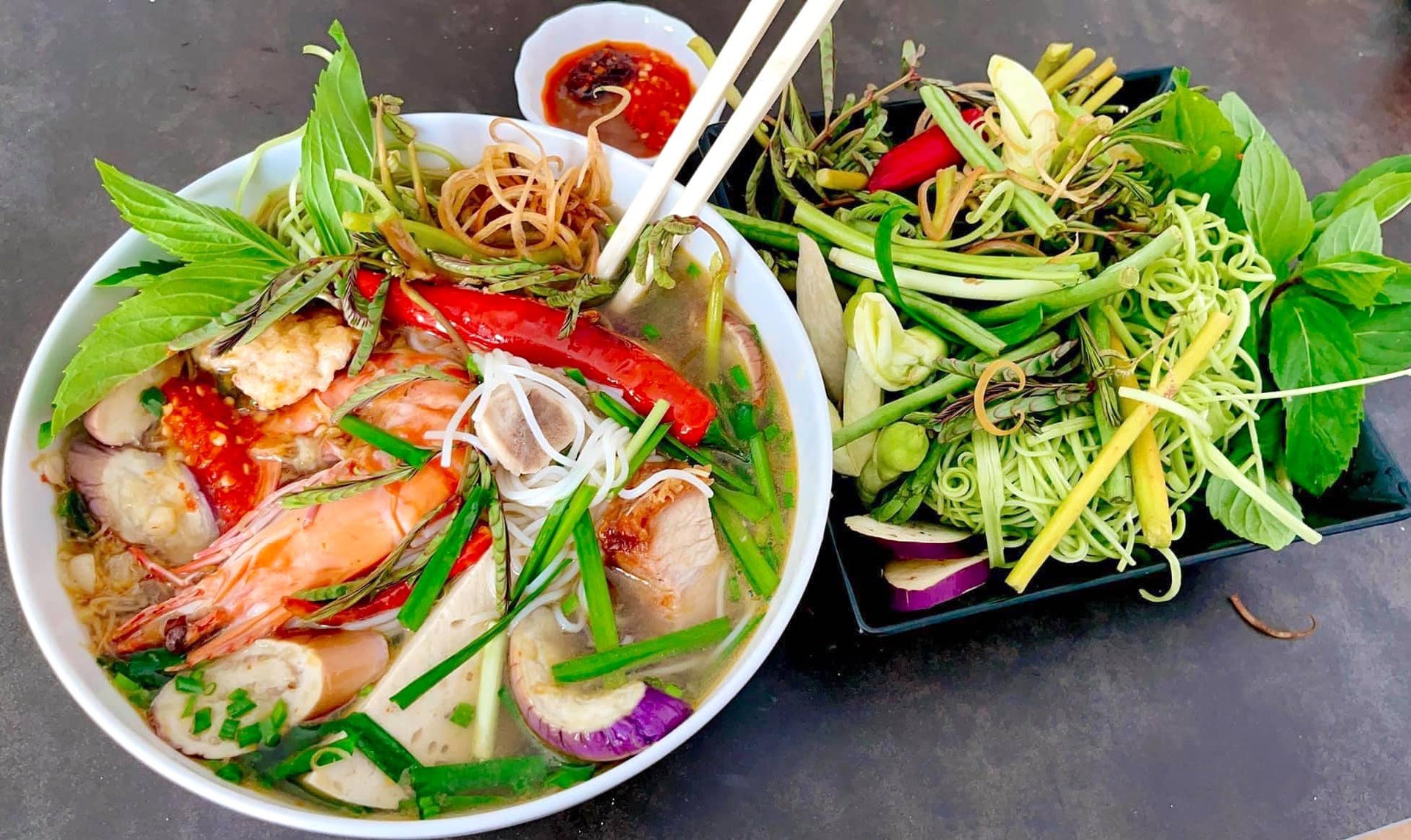
Bun Mam from the Mekong Delta is a rustic dish, with broth made from fermented linh or sac fish.